
Arts-based activities, such as using collage to envision healthy futures where we “get it right”, allow students to creatively express their learning and support their well-being.
Commentary
Arts-based educational approaches allow students to creatively express their ideas, explore real-world challenges, and enhance classroom communities (Parker & Perry, 2025). Robust research demonstrates that arts engagement facilitates well-being through reducing stress, promoting social connection, elevating underrepresented voices, and reducing stigma (Jensen & Bonde, 2018; Rodriguez et al., 2024).
For a graduate-level course on mental health, we designed an activity inspired by the book, What if we get it right? Visions of Climate Futures (Johnson, 2024). The activity’s goals were to creatively express themes from the course and to support classroom well-being.
The instructor first introduced research showing how arts engagement promotes well-being. Then, we used paper, markers, colored pencils, glue, and magazines to create collages based on two questions: What if we get it right with mental health? What would that future look like?
Afterwards, everyone wrote a few sentences about their artwork, what it meant to them, and/or how it connected to the course themes. Fourteen students, the Teaching Assistant, and the instructor agreed to have their artwork and reflections shared in a digital zine and a collage of the physical pieces.
In anonymous feedback, students wrote that they enjoyed and appreciated the chance to be creative and express their thoughts through art. They noted that the activity was fun and relaxing, and helped them to be “calm, centered, and focused.” Students also shared that the activity enabled them to connect the concepts they learned to potential futures of public mental health.
For example, throughout the course, we discussed how various forms of systemic oppression negatively affect the mental health of marginalized populations. This activity allowed students to optimistically explore the result of combating such oppression as future public health practitioners, with one student writing: “I appreciated the opportunity to be hopeful and creative about a future for public mental health. Especially when so much of what we are learning feels hopeless…” Students recommended encouraging students to bring in materials for collaging, providing additional art supplies, and giving time for students to share about their art with their peers (if they wanted to), all of which could facilitate greater engagement with the activity.
While this activity was tailored to a graduate-level public health course, it could be easily adapted to other health sciences topics. Future evaluations with more robust data collection could provide deeper insights into the effectiveness of arts-based activities in health professions education.
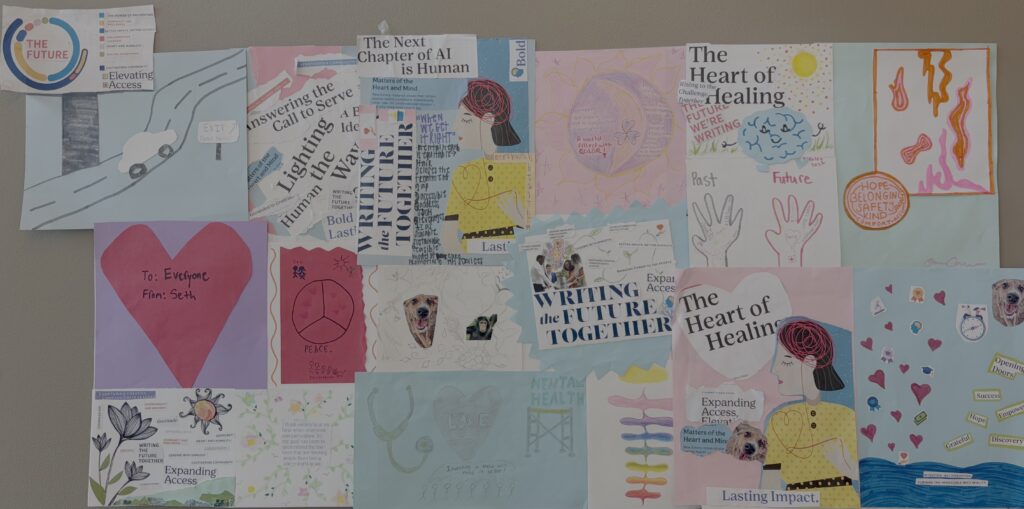
Figure 1: Collage of student work representing “What if we get it right with mental health?”
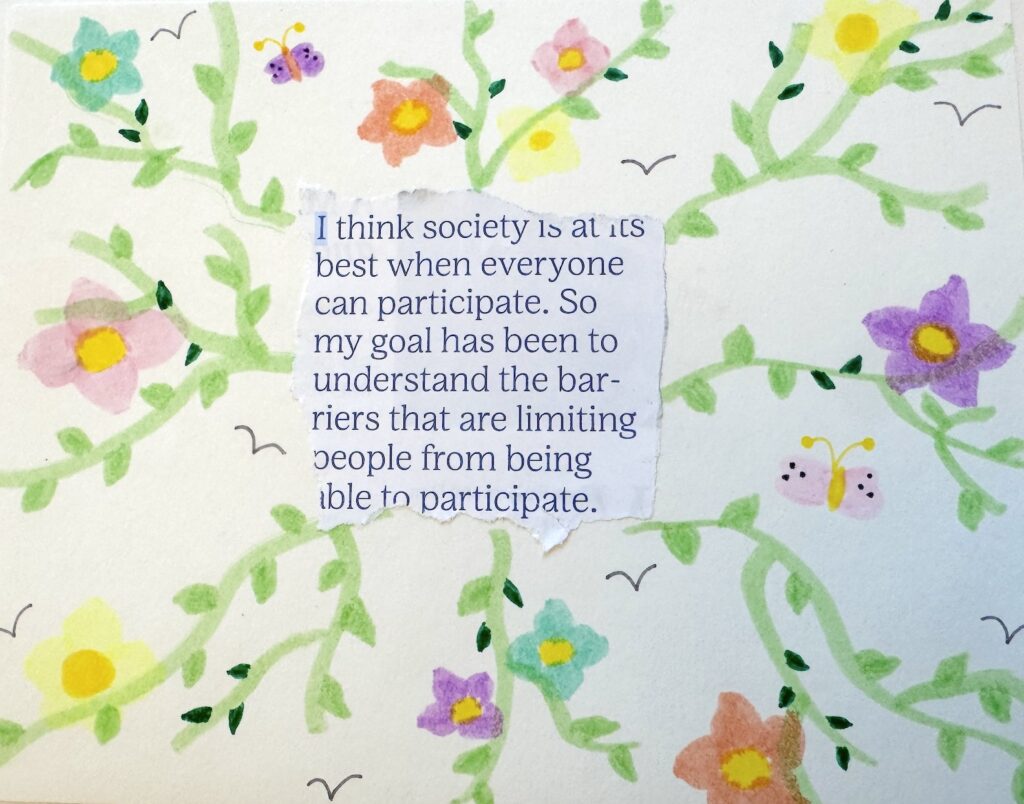
Figure 2: Kate Franco – My piece is about allowing people to bloom and dismantling the barriers that prevent them from doing so. In an ideal world, everyone would be allowed to be happy and be themselves without any holding back. Everyone deserves to be happy and fulfilled. Dismantling these barriers is the first step to a beautiful and productive and meaningful life.
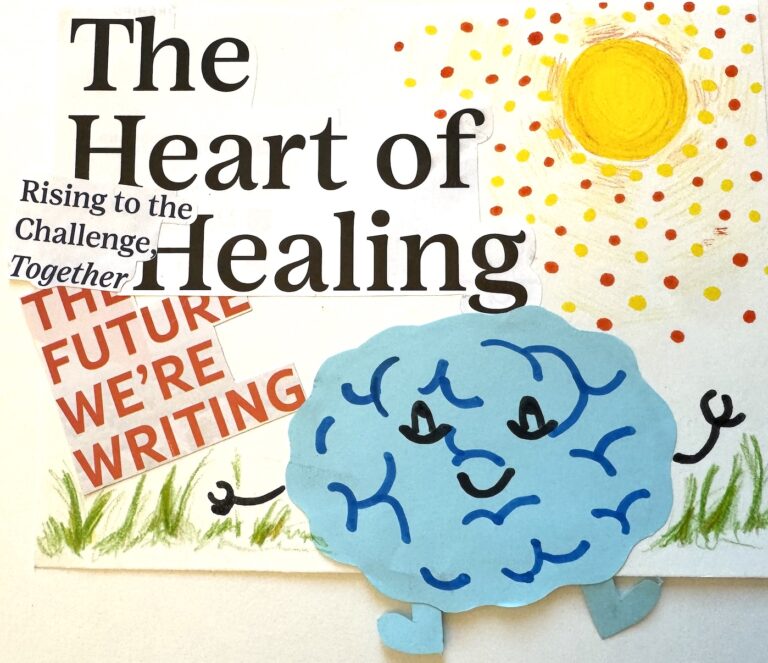
Figure 3: Olachi Unaka – My art piece reflects healing and looking towards a brighter future. It includes statements of affirmation and a depiction of brain health.
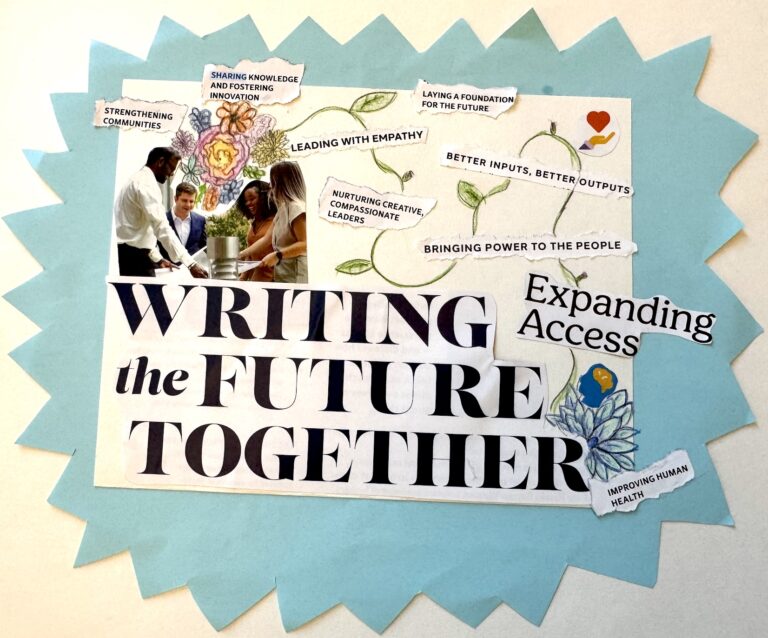
Figure 4: Kayla Means – My piece represents the beauty and growth that occurs when we engage with community in a meaningful, collaborative, supportive, empathetic, and empowering way. A perfect future for mental health would be a world in which everyone feels some sense of responsibility for the well-being of others and where everyone feels free and supported enough to express their vulnerabilities and get the help they need. The floral element represents the beauty in society blooming toward this hope.
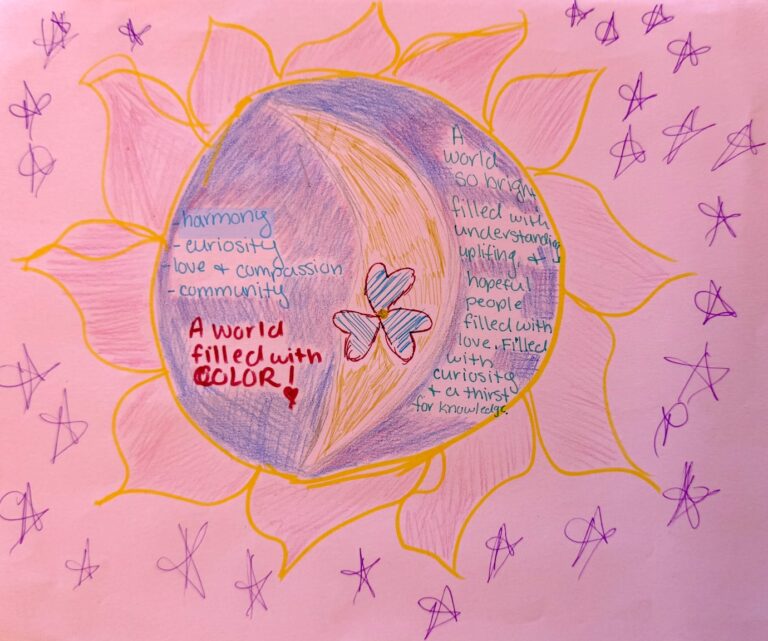
Figure 5: Ami Syed – This artwork represents how I believe “if we get mental health right,” the world would be more of a whimsical collective. People would be harmonious with one another, curious, whimsical, and willing to help. I decided to make it whimsical because reconnecting with the whimsical side of myself helped me regain myself after falling into depression. The world needs more whimsy after all.
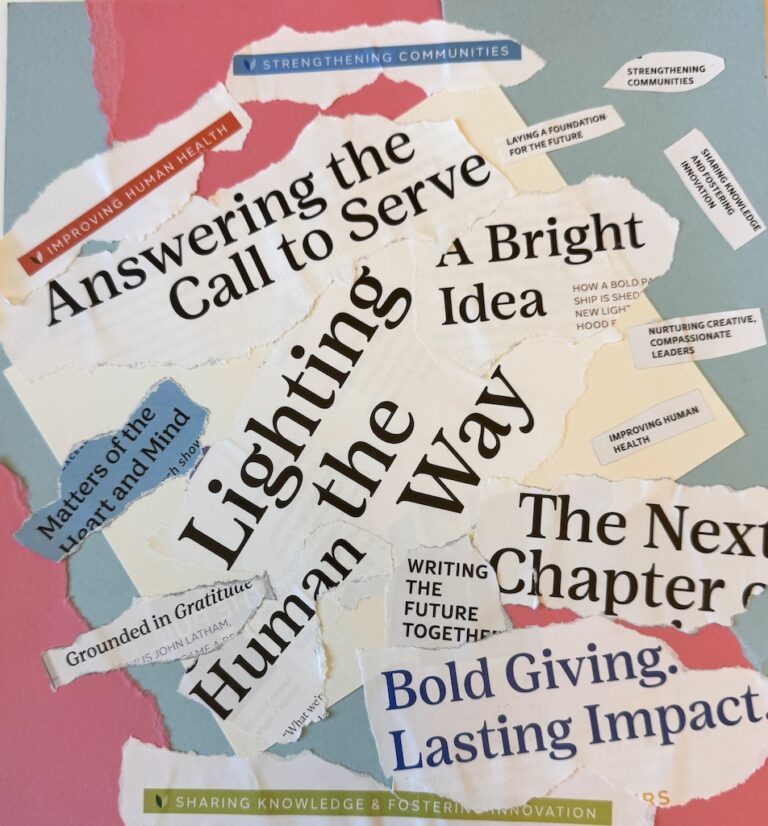
Figure 6: Rubi Gomez – When I think of a better future, I don’t see images, per say, but words come to mind. This is what my art depicts. Powerful, positive words that make the reader/viewer feel good. Nothing in the art piece is perfect, and that’s on purpose. I don’t think the future and mental health will be absolutely perfect and I needed others to see that. Words and labels hold power and that is the strongest theme I think of when thinking of mental health.
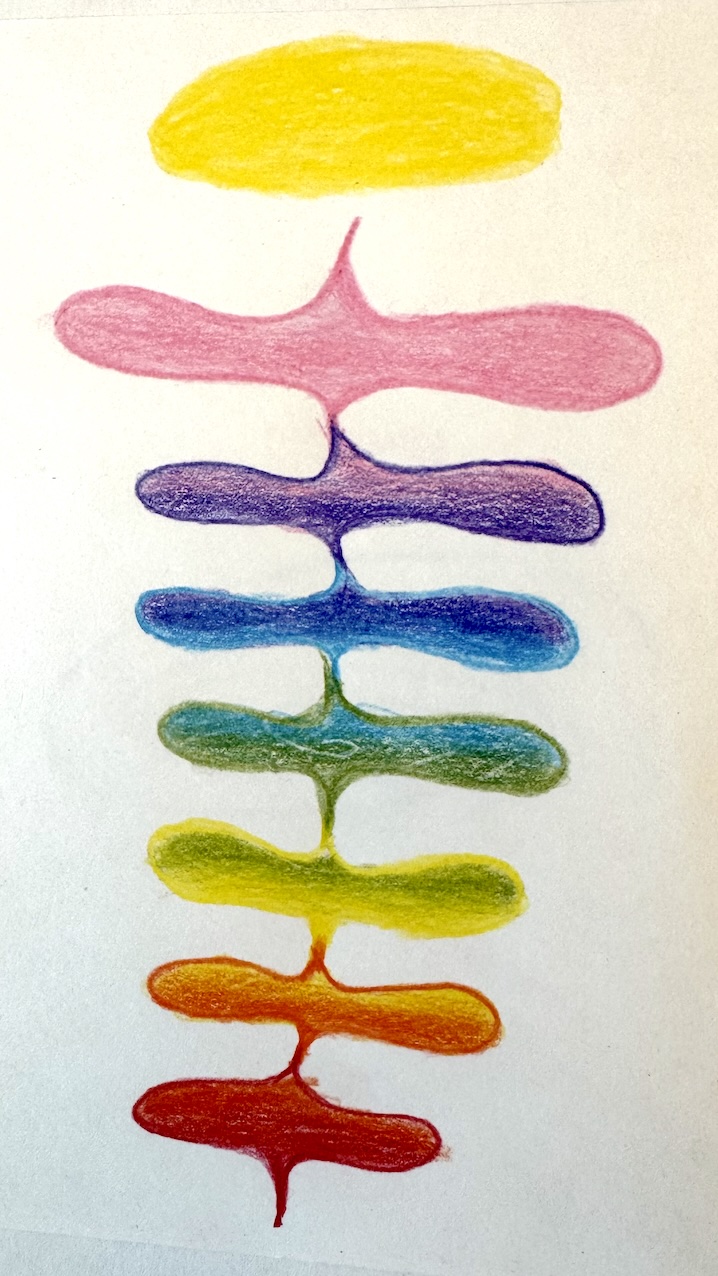
Figure 7: Jess Kubert – My piece is called ‘Alignment.’ I believe in a future where we get mental health right is one where we exist in harmony, balance, and truth between our inner and outer worlds. It does not mean we are happy-go-lucky all the time. The highest vibrational frequency you can feel is Authenticity. This radiates out to everyone and everything you come into contact with. Good mental health isn’t about striving for perfection, innocence or joy. Those feelings are part of it, but being in alignment with your values and having the truth of your experiences—good and bad—is the future we all deserve.
Acknowledgments
The authors received no grant support for this work and declare that they have no conflicts of interest in regard to it.
Jensen, A., & Bonde, L.O. (2018). The use of arts interventions for mental health and wellbeing in health settings. Perspectives in Public Health, 138(4), 209-214. https://doi.org/10.1177/1757913918772602
Johnson, A. E. (2024). What if we get it right? Visions of climate futures. One World.
Parker, N., & Perry, B. (2025). Using arts-based approaches and pedagogy in social justice. In M. Capous-Desyllas & E. Papouli (Eds.), Creative pedagogies: Using arts-based approaches for online and in-person learning (pp. 4-13). Cognella.
Rodriguez, A. K., Akram, S., Colverson, A.J., Hack, G., Golden, T.L., & Sonke, J. (2024). Arts engagement as a health behavior: An opportunity to address mental health inequities. Community Health Equity Research & Policy, 44(3), 315-322. https://doi.org/10.1177/2752535X231175072
Elizabeth Reisinger Walker, Phd, Mph, mat
Teaching Associate Professor, Department of Behavioral, Social, and Health Education Sciences, Rollins School of Public Health, Emory University, https://orcid.org/0000-0001-7221-3089
seth cohen, bs
Master of Public Health Student and Teaching Assistant, Department of Behavioral, Social, and Health Education Sciences, Rollins School of Public Health, Emory University
Kate Franco, BS
Master of Public Health Student, Department of Behavioral, Social, and Health Education Sciences, Rollins School of Public Health, Emory University
Rubi Gomez, BS
Master of Public Health Student, Department of Behavioral, Social, and Health Education Sciences, Rollins School of Public Health, Emory University
jess kubert, ba
Master of Public Health Student, Department of Behavioral, Social, and Health Education Sciences, Rollins School of Public Health, Emory University
Kayla Means, BS
Master of Public Health Student, Department of Epidemiology, Rollins School of Public Health, Emory University
Ami Syed, BS
Master of Public Health Student, Department of Behavioral, Social, and Health Education Sciences, Rollins School of Public Health, Emory University
Olachi Unaka, BS
Master of Public Health Student, Department of Epidemiology, Rollins School of Public Health, Emory University
Published: 9/22/26